I haven’t read this one myself yet. This guide is based on research, the publisher’s information and what other animators say about it.
For animators and artists who can already draw a bit and want more life, acting and clarity in their poses.
Menno’s take: Just like Vol. 1, this isn’t really a how-to-draw book. It’s about the mindset you need to draw well. It teaches you how to look, and what to look for. In a sense, it’s a book for the thinking drawer.
About the author
Walt Stanchfield (1919–2000) joined Walt Disney Studios in the 1950s. He worked on films such as Sleeping Beauty, 101 Dalmatians and The Jungle Book. For more than 20 years he also taught drawing classes at the studio, to students like Glen Keane, Andreas Deja, Brad Bird and Tim Burton. Producer Don Hahn (Beauty and the Beast, The Lion King) collected and edited his class notes into two volumes.
Strengths and weak spots
Reviewers praise the depth of the lectures. Parka Blogs calls the set “a tremendous wealth of information and insight into drawing, animation and observation”. Animator Island calls both volumes “incredible collections of secrets of both drawing and animation” and says they could take a lifetime to absorb. The focus is on how to think while drawing: clear gestures, staging and acting, not just correct anatomy.
The weak spots come from the same format. The notes were never written as a book, so they don’t flow well from page to page. Animator Island suggests reading them one at a time, like the original weekly handouts. Parka Blogs describes them as “more thinking than drawing technique books”. They explain how to use perspective or gesture, not how to construct a figure step by step. Most reviews also cover both volumes together, so few say how Vol. 2 compares with Vol. 1 on its own.
Best for / skip if
Best for: readers who liked Vol. 1, animation students who do life drawing, and animators who want their poses to read and act better.
Skip if: you want pretty pictures. This is not an art book; it’s a useful guide to help your thinking on drawing. Also skip it if you want a structured anatomy or drawing course, or if you haven’t tried Vol. 1 yet. Animator Island suggests starting with Vol. 1 to see if the format suits you.
What’s inside
Volume 2 picks up where Vol. 1 stops. Like the first book, it is a collection of Stanchfield’s weekly handouts, not a step-by-step course.
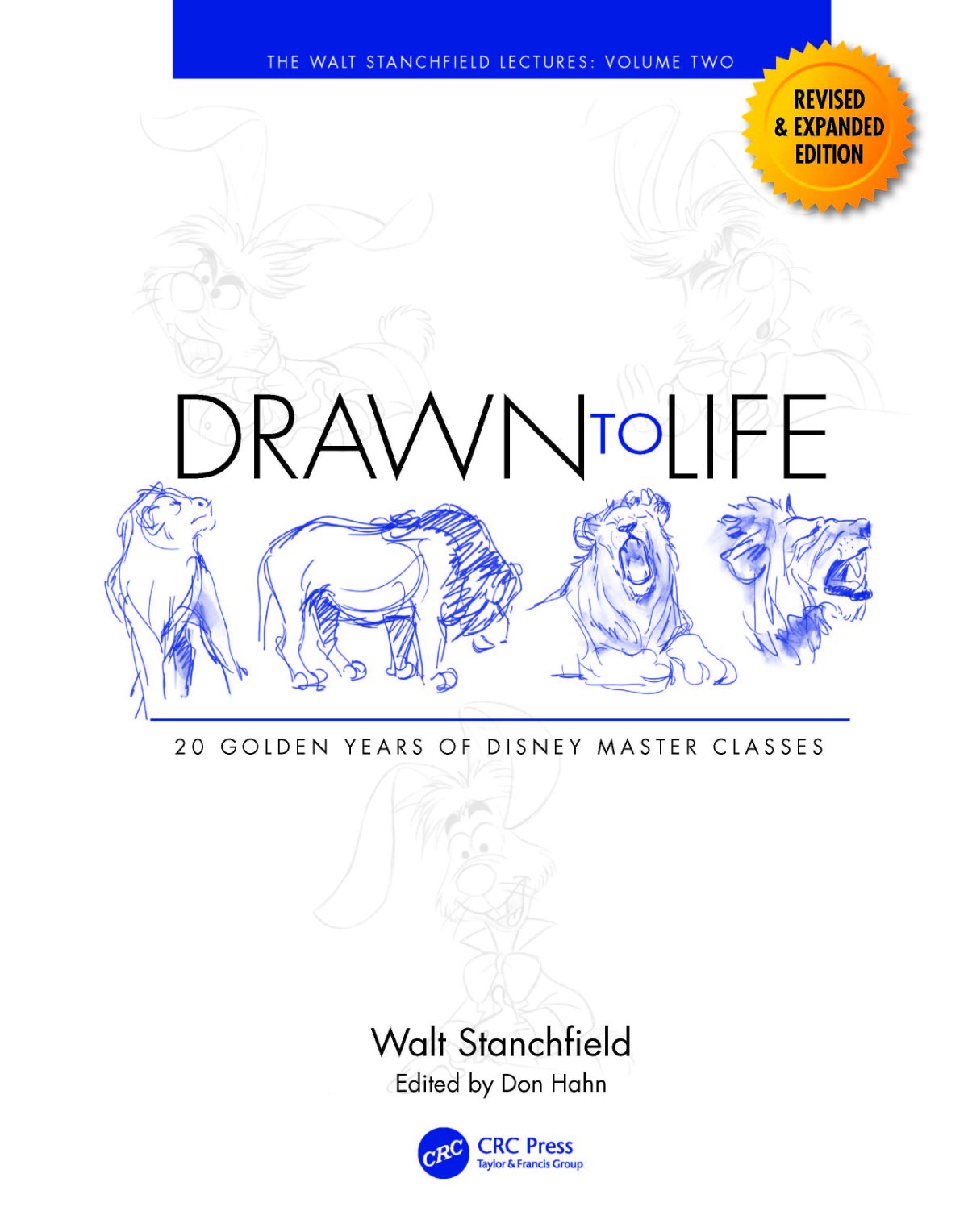
- Edition: 2nd edition, CRC Press (Routledge), July 2023. Routledge lists 382 pages with 103 color and 452 black-and-white illustrations.
- Structure: 68 short lectures in three parts: Innovation, Drawing and Expression.
- Topics: gesture, caricature, perspective, overlap, space, pantomime, hands, necks, animals and quick sketching. Several lectures are about attitude: being an “artist/actor”, getting emotionally involved, and not being ordinary.
- Illustrations: mostly loose gesture sketches next to the text.
- Level: students to working animators. You can start at any lecture.
- First edition: 2009, 354 pages (ISBN 9780240811079). It is still sold, often secondhand.
See it first
A flip-through of the Drawn to Life books by Parka Blogs:
Similar books
If you haven’t read it yet, start with Drawn to Life, Vol. 1, the first half of the lectures. The Illusion of Life covers the Disney principles from the same studio era. For timing and mechanics, which Stanchfield barely covers, see The Animator’s Survival Kit.
Get the book
Drawn to Life, Vol. 2
Walt Stanchfield · CRC Press, 2nd edition
Stanchfield’s Disney lectures on gesture, acting and observation, for animators who already draw a bit.
Some links may be affiliate links. How that works.
Leave a Reply