Author: Menno

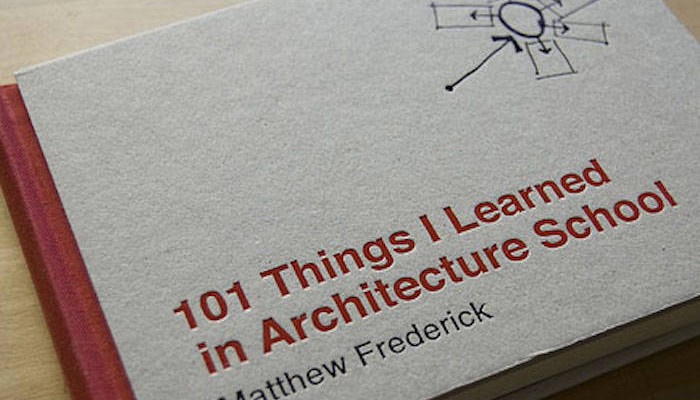
  • 101 Things I Learned in Architecture School

    101 Things I Learned in Architecture School

    Although this book is aimed at architecture students, i felt it was actualy quite helpful in thinking about space, architecture and the creative process while designing scenery for some of my animations.

    It has helpful tips on how think and create through sketching, but also slightly more meta subjects as what makes space exciting or compelling to look at. What makes it dramatic, how do you frame your views?

    Each spread is a single idea, technique or concept. Great illustrations and wise words throughout. I really love the board cover and binding. Another nice touch is the numbering and the use of the blackened center gutter.

    These 101 concise lessons in design, drawing, the creative process, and presentation go from the basics of “How to Draw a Line” to the complexities of color theory. Each lesson uses a two-page format, with a brief explanation and an illustration that can range from diagrammatic to whimsical. The lesson on “How to Draw a Line” is illustrated by examples of good and bad lines.

    Because i am not an architect, this gave me a fresh perspective on designing buildings or spaces or simply sketching out a scene.

    “How to draw a line, the meaning of figure-ground theory, hand-lettering and the fact that windows look dark in the daytime each item has resonance beyond architecture. Books like this are brief tutorials in the art of seeing, a skill useful in every aspect of life on the planet.” —Susan Salter Reynolds,latimes.com

    About the Author

    Matthew Frederick is an architect and urban designer in Cambridge, Massachusetts. He has taught at a number of colleges and universities, including Boston Architectural College and Wentworth Institute of Technology.

    Purchase: 101 Things I Learned in Architecture School Amazon

  • Drawn to Life: The Walt Stanchfield Lectures – Vol.1

    Drawn to Life: The Walt Stanchfield Lectures – Vol.1

    Never judge a book by it’s cover applies to this gem of a book. So boring and unassuming on the outside and so much interesting and witty lessons to be filled inside. Drawn to Life is based on the Walt Stanchfield Lectures at Disney. Walt Stanchfield worked at Disney for over 30 years and did lectures for the animators there.

    The book is very much based on gesture drawing, or how to sketch out poses fast an effectively. The art of gesture drawing is an unappreciated form of art, because it is incredibly useful if you have to try out ideas for scenes. What is noticeable in this book, is that you do not nee to read it in any particular order. You can start with any lesson on any page. This is because the lessons are not meant to build up to a certain skill, but to to keep this skill constantly activated.

    There are plenty of essays in the books. Each is a lesson relating to drawing and animation. It can be tangent drawings, creating believable characters, learning to observe, understanding gestures, etc. There are tips on almost anything relating to drawing. Loose and sketchy sketches serves as examples to the lessons. These books are more thinking than drawing technique books. For example, the lessons are not about how to draw perspective, the lessons are about how to use perspective.

    Puchase Drawn to Life on Amazon


  • The Illusion of Life: Disney Animation

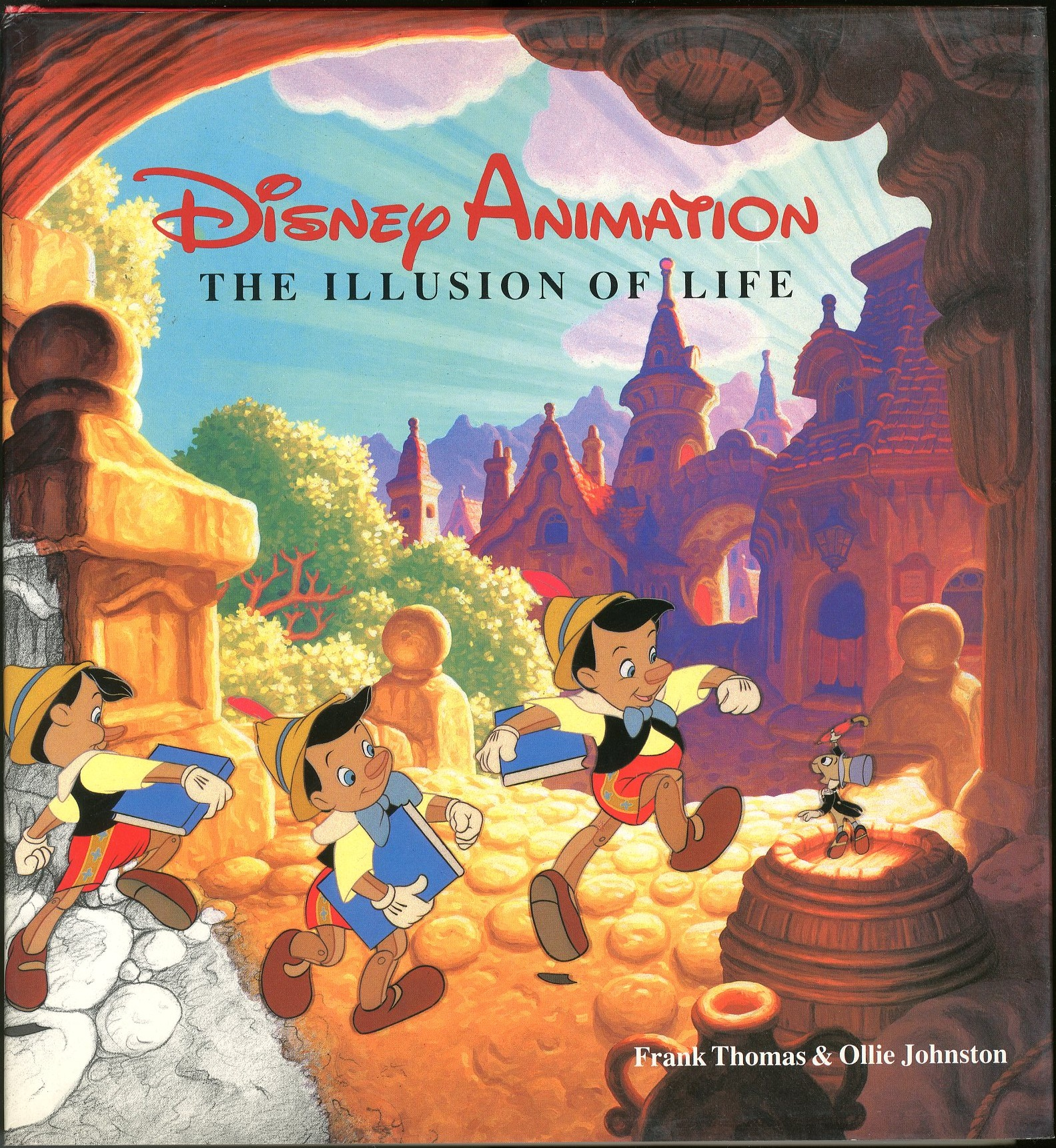
    The Illusion of Life: Disney Animation

    The Illusion of Life the holy bible of animation books.

    If you are considering entering the animation field then by all means purchase this book and read it thoroughly. Speaking as someone who started animation awhile back and needed to learn from the best, I found this one book the most helpful. I was turned onto the book from one of the actual Disney animators and we were able to discuss being in the business. It’s what he, and most of the others that work there, consider the Bible of Animaton. His words. The book itself is not for a quick read or a nightly read. It’s an education and industry guide for the world of movies. As I’m working on any project, you can bet I reference this book a lot.

    A classic. Great history, characters and timeless techniques. Comprehensive analysis of traditional animation concepts that largely translate to the digital world. Just get it already.

    For the uninitiated, Frank Thomas and Ollie Johnston are some of the best known of Disney’s Nine Old Men, a group of Disney animators who worked at the Disney studio during what many call “The Golden Age of Animation”. They were there during the production of some of the most memorable and cherished Disney classics like Sleeping Beauty, Pinocchio, Fantasia, and Lady and the Tramp. During the Golden Age, Disney sought to elevate animation to an art form. The Illusion of Life reveals how this was accomplished, from the perspective of the artists who were there.

    This is where you’ll learn all about the Twelve Principles of Animation, which Disney’s Nine Old Men developed. If you’re unfamiliar with the 12 Principles, you will be after reading the book. They’re all explained in detail, not just what each principles is but how Disney animators applied them to their craft. (or look at this video)


    This book gives a history of the early days of animation that shaped this empire. The artwork is amazing and I love to look at it over and over.

    Purchase: The Illusion of Life on Amazon


  • Elemental Magic – Volume I

    Elemental Magic – Volume I

    This book helped me out greatly while creating the effects for the music video In the Middle of the Nite.

    It breaks apart the fundamentals of how and why particles move in a certain way in fire, water or explosions. This gives you a very well reasoned approach to creating effects for animation.

    2D effects animation is an artform that seems to be rediscoved through the influences of manga and flat animation. Often these effects are drawn almost out of intuition, but it is nice that you can approach this in a more theoretical way.

    Disney veteran Joseph Gilland (great 90-ies website) has finally given us that first book dedicated to 2D effects animation. He’s broken down effects into four broad categories (water/liquids, fire/smoke, props/solid objects and magical effects) and laid out the principles needed to bring them to life on paper.

    Since every real-world splash and flame is unique, Elemental Magic isn’t so much of a “how to draw” type book as it is a “how to approach” book. Gilland breaks down the basic behaviors of different types of matter and the working methods needed for an animator to capture the dynamic essence of an effect without being tied to a hyper-real style or getting bogged down in an unmanageable level of detail.

    When I first opened this soft cover, rectangular book, and I thought “OMG!” Inside, this book looks like an illustrator’s private sketch book. Hundreds of beautifully hand-drawn, colored sketches: some segregated from the text, others used as a background (watermarked) with the text overlaid. Next to each illustration is a brief, but thorough explanation of the process. And, the key to understanding this message is summed up in one word: energy.

    Joseph Gilland presents his topic with examples on his own, complete with tips and common mistakes to avoid. You’ll learn stuff like how animators can remove details and yet keep things realistic. For example, when dealing with liquids, he would talk about the different factors that affect animation, like water density, force, gravity, viscosity, after splash, etc. The various examples include the simple water droplet to creating waves on which surfers surf on. There’s also a chapter on props. These are stuff like breaking branches, falling leaves, moving fabric, crumbling clay, etc. Animating special effects is essentially animating energy. Throughout the book, there are a lot of detailed explanation on how different elements and objects interact with one another. While the book is on classic hand drawn animation, there are also some non-technical writeup on how you can use computers to aid in creating these effects.

    Elemental Magic is a tremendously helpful resource that aims to help animators think through their approach before execution, to save time and effort without sacrificing quality. Even if there are other special effects books out there, this one definitely stands on its own.

    Animators should find this book very useful.


    Purchase: Elemental Magic on Amazon


  • The Noble Approach: Maurice Noble and the Zen of Animation Design

    The Noble Approach: Maurice Noble and the Zen of Animation Design

    The Noble Approach is a book on the dark arts of background design.
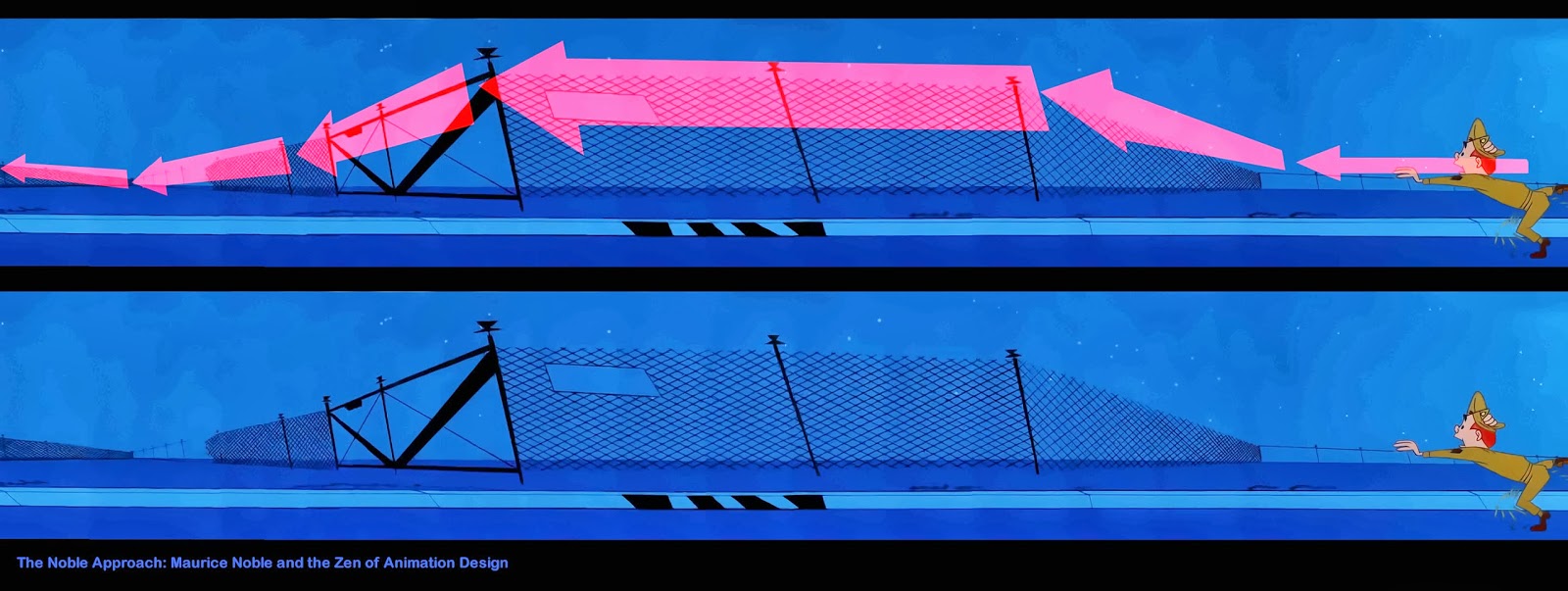
    Maurice noble pioneered a more abstract thinking to his background designs. He exaggerate object in his backgrounds to make scenes feel more dramatic or aid the movement of characters through a scene. His designs made animations feel more bold, for comedic effect. Not only does this bok show some of his beautiful designs, but more importantly they show the thinking behind it. There is a very clear logic to his madness that can be of use to any animator or designer. For instance, he talks a lot about the flow of movement and how playing with the perspective while doing a simple pan can easily suggest movement in a certain direction. Through an in-depth look at his own artistic influences, methods of breaking down details, colour theory and compositional design, you gain a real sense of Noble’s skill as a designer and film maker, with genuine lessons to be learned.

    Visual Memory

    This “Visual Memory” was a store of visual images in his brain that he had built over time

    Maurice Noble had a unique way of using reference. Rather than drawing directly from source material for a particular design, Maurice would pull inspiration from what he called his “Visual Memory.” This “Visual Memory” was a store of visual images in his brain that he had built over time through travel, viewing art, and other experiences that would make an impression on him.  Later… sometimes years or decades later… he would redraw his impression of a place from memory for a design… using its strongest characteristics.

    visual memory
    visual memory

    If you want to know how Noble did it and how you can possibly instill some of his own virtues into your work, don’t just watch the films. Let Polson take you on this very intimate journey and show you how Noble took care to make sure his design met the needs of every single element of an animated film and not the other way around. More importantly, the book is lavishly and colorfully illustrated to appropriately aid the instructions, driving home every point clearly and beautifully. Anyone with an interest in animation, filmmaking, or art in general should buy this book without hesitation. It’d be the Noble thing to do!


    Purchase: The Illusion of Life on Amazon

  • The Art of Pixar – 25th Anniversary

    The Art of Pixar – 25th Anniversary

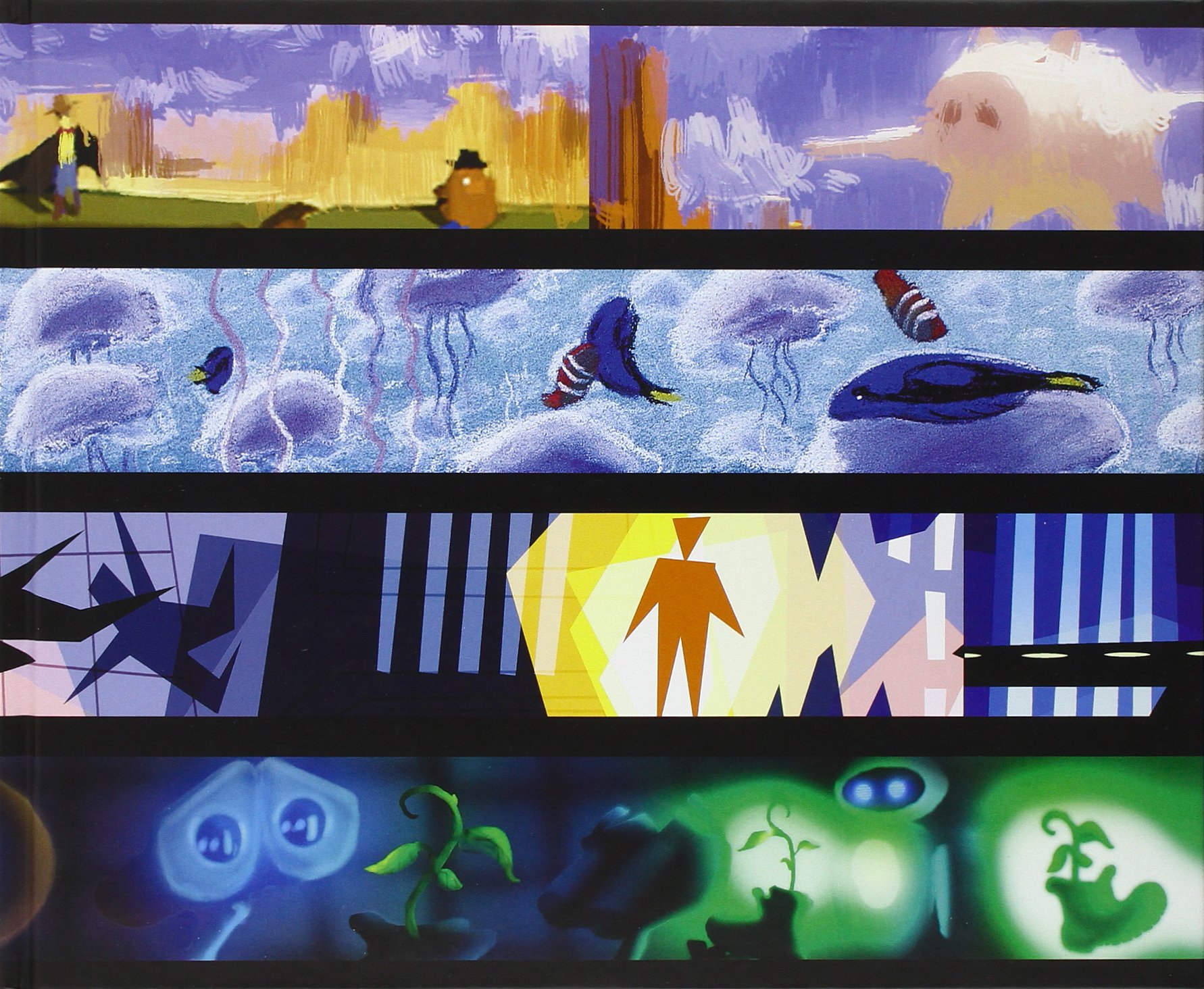
    The Art of Pixar  is a collection of artwork of 25 years of Pixar.

    It is one of my personal favorite books on animation, as it is filled with concept art, color scripts, trails and errors and other fantastic sketches.

    From classics such as Toy Story and A Bug’s Life to recent masterpieces such as Up, Toy Story 3, and Cars 2, this comprehensive collection offers a behind-the-scenes tour of every Pixar film to date.

    The great thing about the books is the wide range of styles that come together to set a mood or athmosphere.

    From gauge illustration to paper collages, and fine pencil drawings on a napkin to digital paintings.

    What really jumps of these pages is the utter dedication, tireless patience and joy that wen into making these works of art.

    Every page surprises and leaves you in awe.

    Also, it makes our frustratingly jealous of the talent. It’s simply gorgeous and inspirational.

    If you don’t have this yet, make sure to get it NOW.

    You will not regret it.


    Purchase: The Art of Pixar on Amazon

  • The Animators Survival Kit

    The Animators Survival Kit

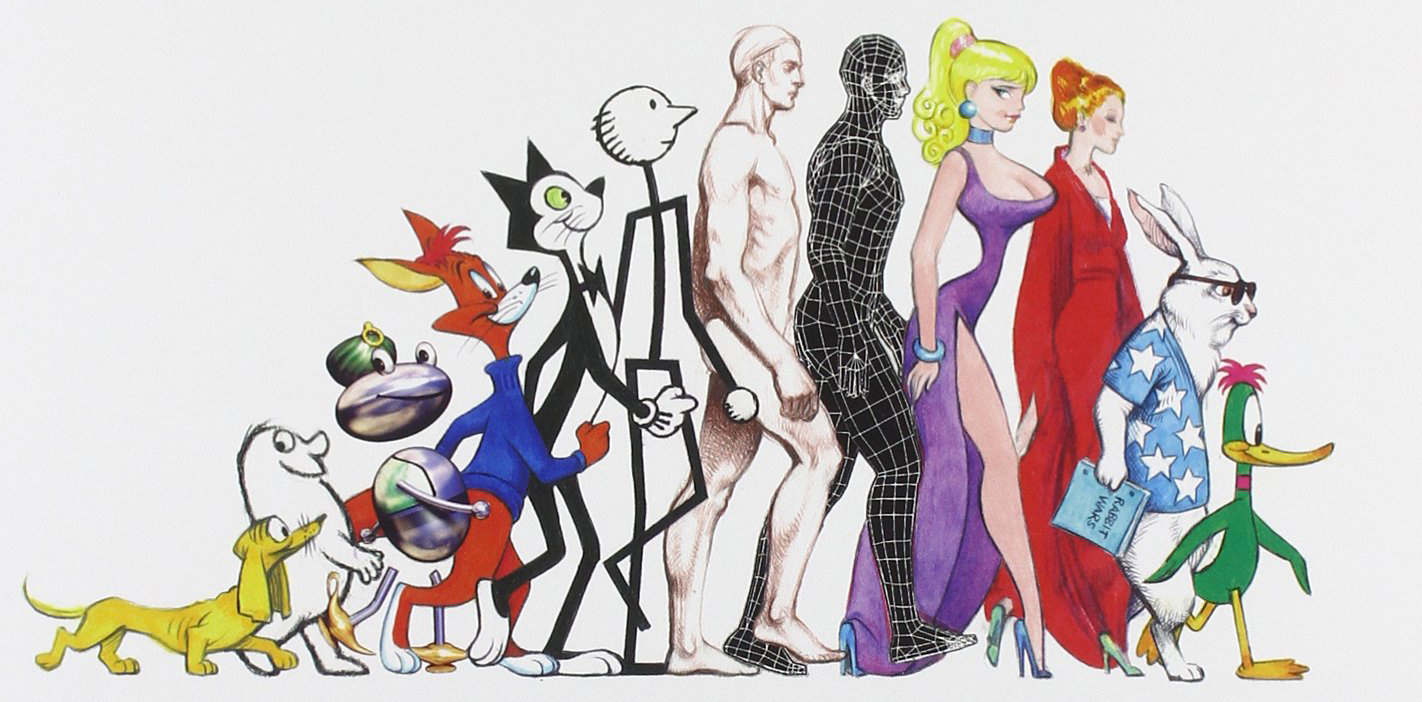
    The Animators Survival Kit is the first book i ever got as an animator.

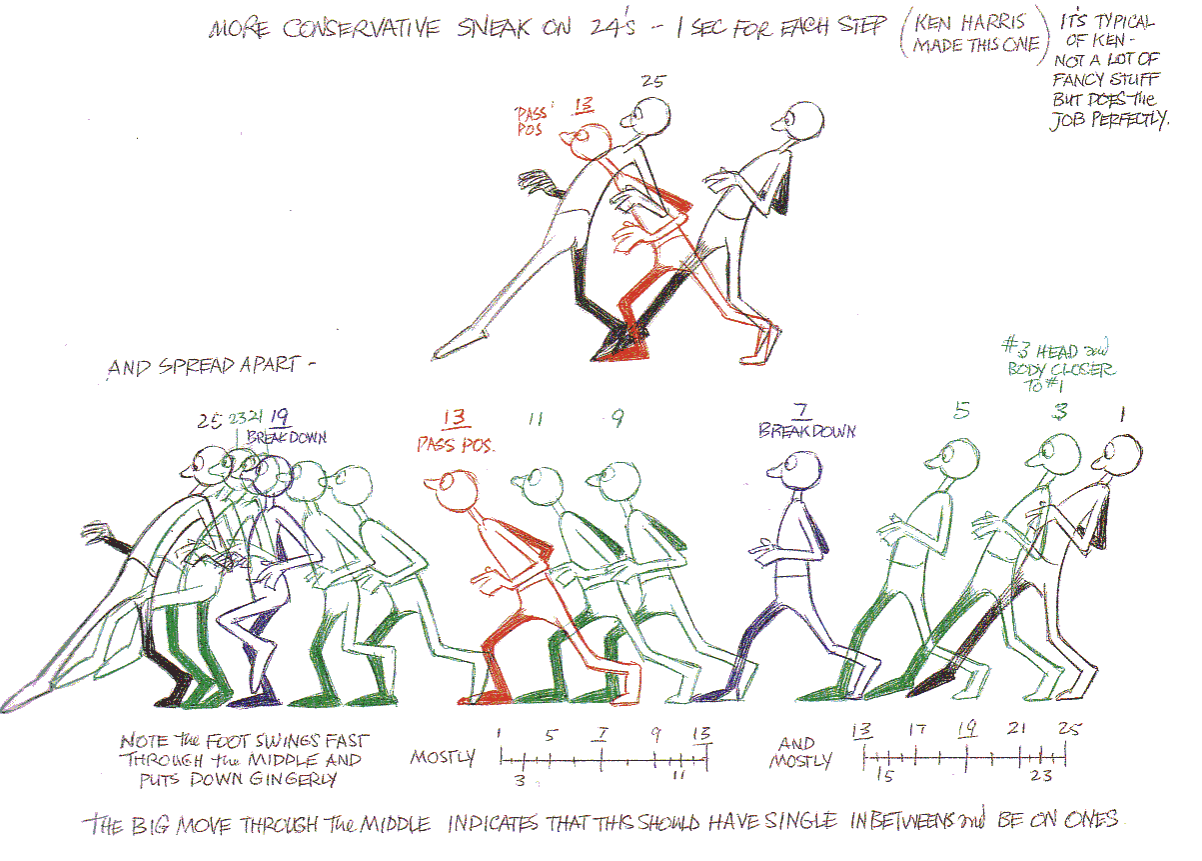
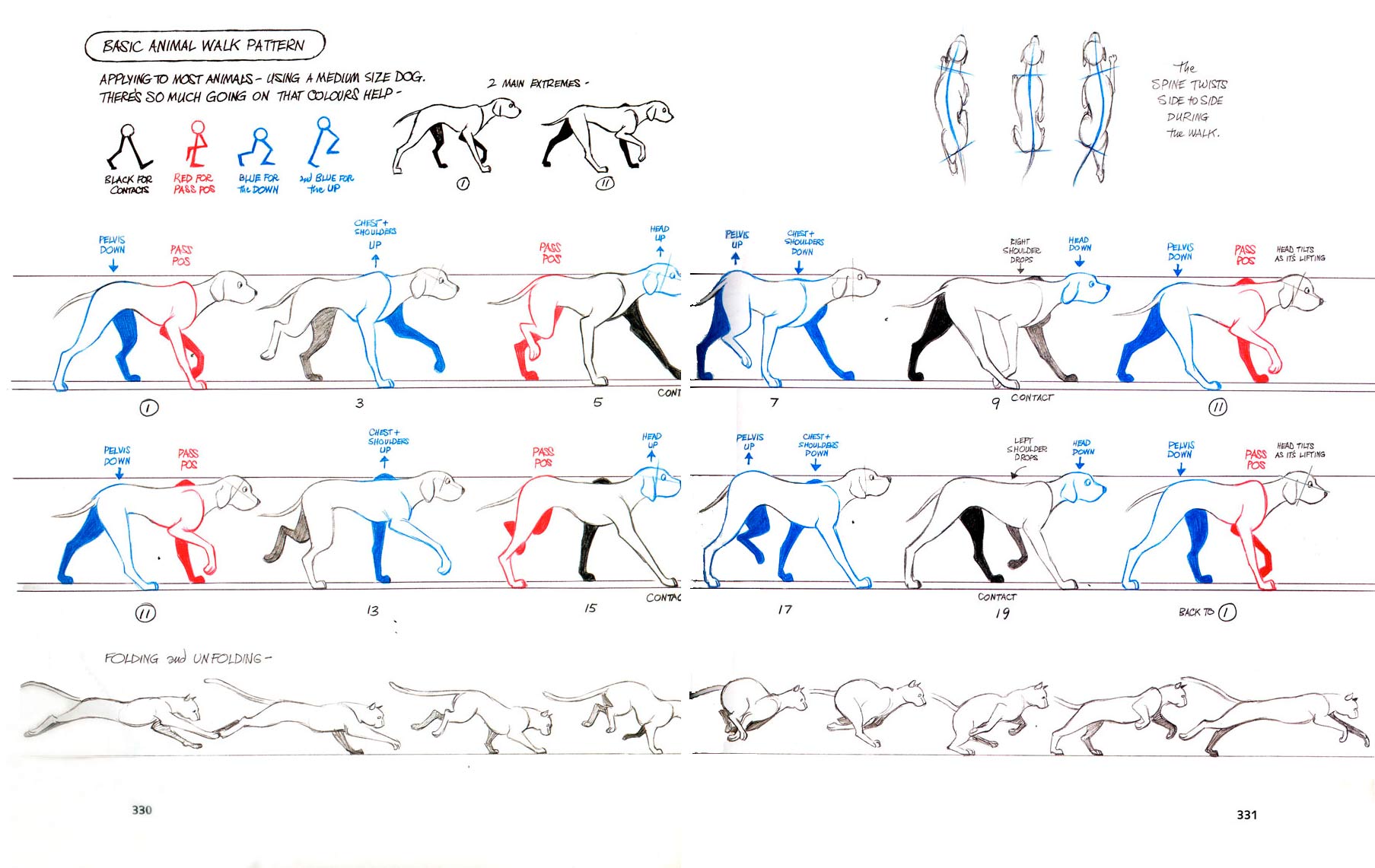
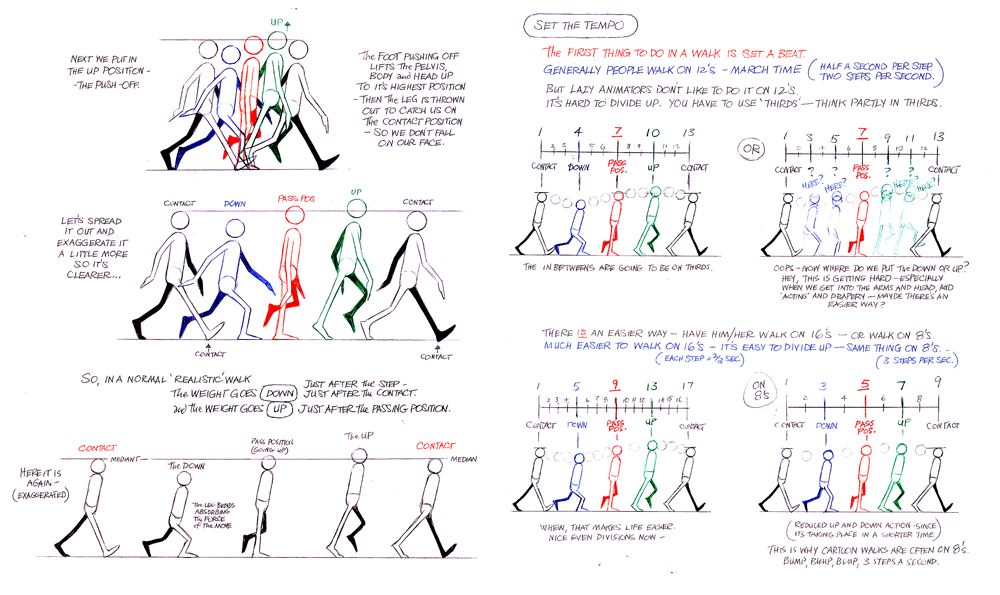
    Animation-books-the-animators-survival-kit-sequence

    It is probably one of the most comprehensive books on character animation. It is a manual of methods, Principles, and Formulas on animations. It doesn’t matter if you are a classical, computer, games, Stop Motion, or Internet Animator, you’ll need this book. Written by Richard Willims, known for Who framed Roger Rabbit, the book has become incredibly popular in the animation industry and is commonly used by animation students worldwide.

    Richard Williams was largely responsible for the revival of the art of animation in the early 1970s. Williams had Disney animator Art Babbitt and Warner great Ken Harris working in his studio in London and training a new generation of animators in the techniques of good character animation, which was not taught at the time in any school or considered an art form.

    During his more than forty years in the business, Williams has been one of the true innovators, winning three Academy Awards and serving as the link between Disney’s golden age of animation by hand and the new computer animation exemplified by Toy Story. Perhaps even more important, though, has been his dedication in passing along his knowledge to a new generation of animators so that they in turn could push the medium in new directions. In this book, based on his sold-out master classes in the United States and across Europe, Williams provides the underlying principles of animation that every animator–from beginner to expert, classic animator to computer animation whiz –needs. Urging his readers to “invent but be believable,” he illustrates his points with hundreds of drawings, distilling the secrets of the masters into a working system in order to create a book that will become the standard work on all forms of animation for professionals, students, and fans.


    Purchase: The Animators Survival Kit on Amazon